
Upright GO 2 Posture Trainer
A small wearable that gently vibrates when you start to slouch, helping build better posture habits during long days of lifting, bending and caregiving.
Check Price on Amazon →Caregiving is physically demanding in ways that rarely get discussed — and posture is one of the first casualties. If you’re also managing hospital bed transfers or helping with walker use, the cumulative strain on your back is real. Constant bending, lifting, and transferring a loved one takes a real toll on your back, shoulders, and neck.
Moreover, the toll often shows long before patience wears thin. If you’ve caught yourself slouching at the end of a long day, a posture corrector for caregivers can genuinely help.
Not all products are built for real, all-day wear. This is why fit and comfort matter when choosing a solution for ongoing support.
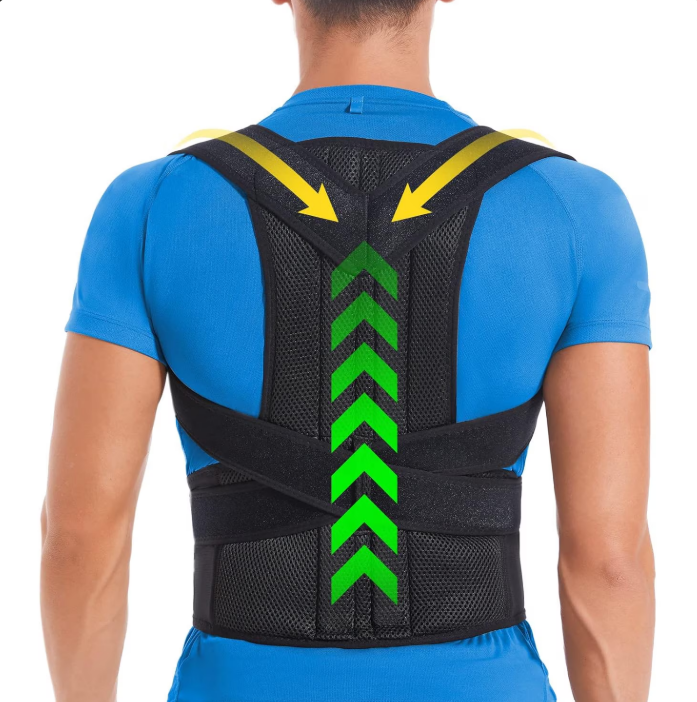
My Personal Experience — The Part Most Reviews Skip
I bought and personally tried a strap-style posture corrector. The kind uses straps that loop under and around your armpits to pull your shoulders back. Here’s the honest truth that most product listings won’t tell you. The underarm straps are genuinely uncomfortable.
When tightened enough to correct posture, they dig into the skin under your arms. The discomfort worsens as you lower your arms, which is constant for caregivers who lift or reach all day. That is why a posture corrector for caregivers should prioritize comfort.
This isn’t a defect in one specific product — it’s a structural issue with the entire “figure-8 strap” style of posture corrector. If your job involves repeated arm movement (exactly the kind of movement caregiving requires), this style may fight against your daily tasks rather than support them.
What Actually Matters When Choosing One
1. Strap placement and width. Wider, padded straps distribute pressure better than thin straps — thin straps concentrate force into a smaller area, which is exactly what causes underarm discomfort. If a product photo shows thin straps, expect the issue I described above.
2. Compatibility with arm movement. If your day involves lifting, reaching, or transferring someone, a rigid figure-8 brace may become uncomfortable fast. A wearable sensor-based device (see below) sidesteps this problem entirely since it doesn’t physically restrain your arms at all.
3. Breathability and wear duration. Caregiving days are long. A brace that feels fine for 20 minutes at a desk may be unbearable after 6+ hours of physical activity. Look for breathable, moisture-wicking material if you plan to wear it most of the day.
4. Adjustability without needing help. You should be able to put it on and adjust it yourself, one-handed if possible, since caregivers often don’t have a free moment to ask someone else for help with their own equipment.
Comparison at a Glance
Top Picks: Upright GO 2 Sensor — Check price on Amazon → (best for caregivers who move and lift — no underarm straps) | ComfyBrace Posture Corrector — Check price on Amazon → (best padded strap brace)
| Product | Type | Price Range | Underarm Straps? | Best For |
|---|---|---|---|---|
| Upright GO 2 | Wearable sensor (vibration feedback) | $79–$109 | No | Caregivers who move/lift often, discreet all-day wear |
| ComfyBrace Posture Corrector | Soft figure-8 brace | Budget–mid | Yes, padded | Light daily wear, seated tasks |
| Fit Geno Posture Corrector | Adjustable breathable brace | Mid-range | Yes | Balance of support and comfort for extended wear |
| BraceTop | Full-back brace with support bars | Mid-range | Yes, wider straps | Users needing more structured back support |
Prices fluctuate — verify current pricing before publishing or purchasing.
Which One I’d Actually Recommend for Caregivers
Therefore, based on my experience with underarm strap discomfort, a sensor-based device like the Upright GO 2 may fit caregivers. It trains posture with gentle vibration feedback, a posture corrector for caregivers, rather than restraining shoulders and arms.
As a result, it doesn’t fight against the constant lifting and reaching caregiving requires. Thus, it remains suitable for busy days without constant adjustment. Caregivers can rely on steady feedback without fearing harsh restraints. In daily use, the device stays comfortable and unobtrusive.
If you do prefer a physical brace, prioritize one explicitly advertised with wide, padded straps rather than thin ones, and expect some adjustment period — but don’t ignore ongoing sharp discomfort under the arms. That’s your body telling you the fit is wrong, not a normal break-in period.
A Note on Expectations
Posture correctors — of any type — are training tools, not permanent fixes. They work best alongside actual strengthening exercises for the upper back and core. If caregiving-related pain is persistent or worsening, that’s worth raising with a doctor or physical therapist rather than relying on a brace alone.
This is general product information, not medical advice. If you’re experiencing ongoing pain, please consult a healthcare professional.
As with every recommendation on this site, products are evaluated for genuine comfort and usability — not just marketing claims. This page contains affiliate links. As an Amazon Associate (website0079-20), I earn from qualifying purchases.
See our Affiliate Disclosure for details.